
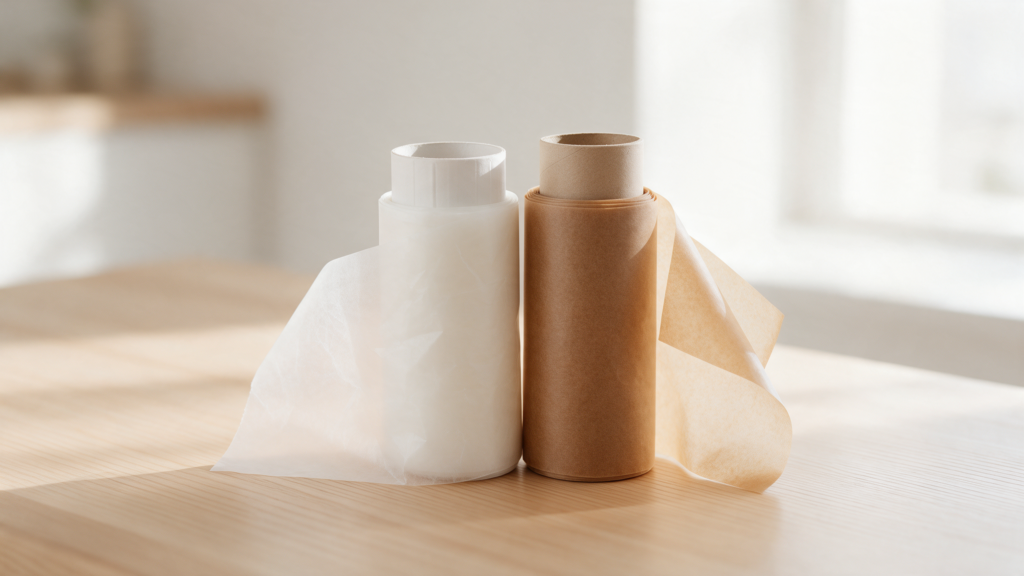
Two sheets of paper, both used for food, both sold in rolls that look nearly identical on a supermarket shelf. One of them will ruin a tray of cookies and set off a smoke alarm. The other will not. Knowing which is which takes about a minute, and most people only learn it the hard way. The wax paper vs butter paper question comes up constantly, and the reason is that the two names do not mean the same thing everywhere.
Are wax paper and butter paper the same thing?
No, though you would be forgiven for thinking so, because the names are a mess. People ask whether wax paper and butter paper are the same almost as often as they ask which one to use, and the confusion is geographic rather than technical.
In the United States, wax paper means one specific thing: paper coated on both sides with a thin layer of wax, usually paraffin or a vegetable wax such as soy. It is the sheet we make most of as custom wax paper. The coating is what makes it slick, moisture-resistant and faintly translucent.
Butter paper is less precise. In the UK, India, Pakistan and much of the Middle East, people say butter paper when they mean what Americans call greaseproof paper or parchment. In the US, the same phrase usually refers to the specific sheet that butter blocks are wrapped in. So when someone asks whether butter paper and wax paper are the same, the honest answer depends on which country they learned the word in. For the rest of this article, butter paper means what it means in most of the world: a greaseproof sheet used for wrapping dairy, lining tins and handling baked goods.
The real difference is how they are made
This is not a detail. In wax paper vs butter paper, how each sheet is made explains every practical difference between them.
Wax paper starts as ordinary paper and gets a coating applied on top. The wax sits on the surface. It is an excellent moisture barrier precisely because it is a separate layer sitting over the fibres.
Butter paper, in the greaseproof sense, has no coating at all. The pulp is beaten and refined for much longer than normal, which swells the fibres and closes the gaps between them until the sheet itself becomes resistant to oil. The resistance is built into the paper rather than added to it.
That difference — a layer on top versus a property of the sheet — is why one of them melts and the other does not.
Heat: the difference that actually matters
Wax paper is not made for the oven, and manufacturers say so on the box. The exact temperature at which it fails depends on the wax — paraffin and soy behave differently, and grades vary between suppliers — so there is no single number worth quoting. What is consistent is the mechanism: well below normal baking temperatures the coating softens and runs, the bare paper underneath is left exposed to direct heat, and from there it can scorch, smoke, and in an oven with an exposed element, catch. So: wax paper is not oven paper. Not at low temperatures, not for a short bake, not covered in foil.
There is one narrow exception that bakers have used for decades. A disc of wax paper in the bottom of a cake tin, completely covered by batter, is generally fine — the batter sits between the paper and the heat and never lets the wax reach the air. Outside that specific case, do not risk it.
Butter paper is more tolerant of heat than wax paper, which is why it is the sheet people reach for when lining a tin. But be careful here, because the name is doing a lot of work: what is sold as butter paper in one country is greaseproof paper, in another it is parchment, and in a third it is a thin dairy wrap. Greaseproof is not automatically oven safe. If heat is involved and you are not certain which of the three you are holding, use parchment — it is silicone coated and rated for sustained oven use at around 425°F (218°C), and it is the only one of the three that carries that rating by definition.
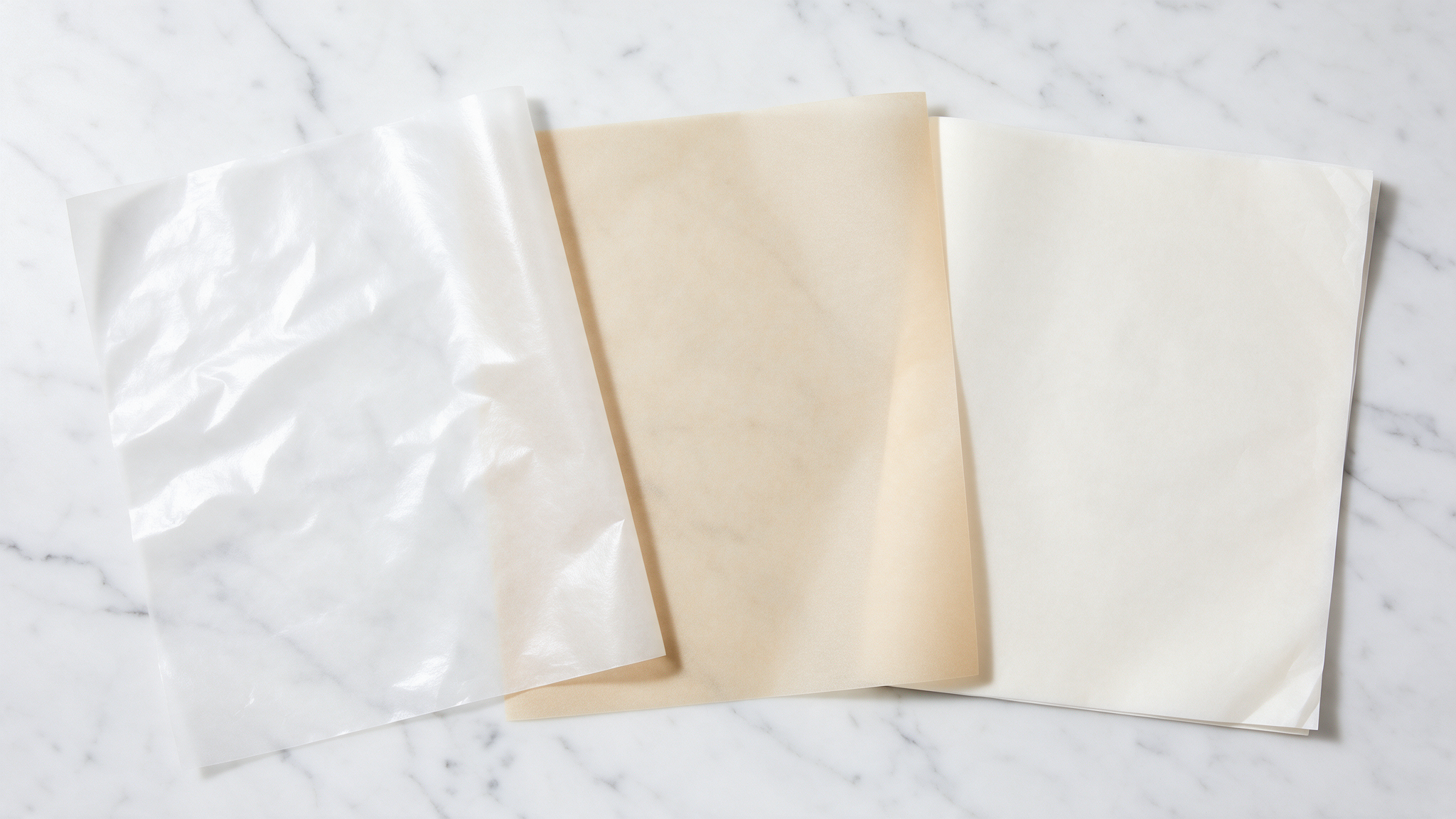
Side by side
| Wax paper | Butter paper (greaseproof) | Parchment | |
|---|---|---|---|
| How it resists grease | wax coating on the surface | the fibres themselves, refined | silicone coating |
| Oven safe | No | Moderate heat only | Yes, to about 425°F |
| Moisture barrier | Excellent | Good | Good |
| Non-stick | Yes, until warmed | Partly | Yes |
| Feel | slick, shiny | matte, paper-like | smooth, slightly waxy |
| Best at | cold work, wrapping, storage | wrapping dairy, lining tins | baking |
When to use wax paper
- Rolling sticky dough. Pie pastry and sugar cookie dough release from it cleanly, and the sheet costs almost nothing.
- Separating things that would otherwise weld together — burger patties before they go in the freezer, slices of cheese, portioned cookie dough.
- Cold and wet. The wax coating is the better moisture barrier of the two, which is why it suits anything damp or chilled.
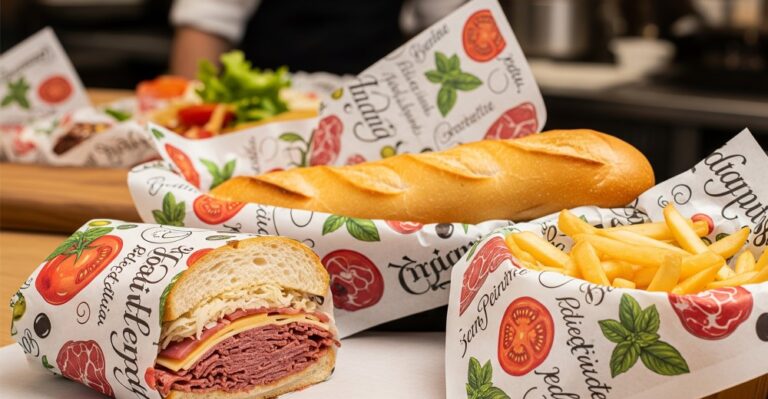
- Wrapping at a counter. Sandwiches, pastries, anything handed straight over. It folds tightly and holds its shape.
- Catching mess. Under a cooling rack while you glaze or dip, so the drips land somewhere you can throw away.
When to use butter paper
- Wrapping butter, ghee and soft cheese. It resists fat without adding a waxy layer that could taint the flavour, and it releases cleanly.
- Lining tins and trays at moderate oven temperatures, where you are not pushing the heat.
- Interleaving baked goods — between pastries in a box, between layers in a tin.
- Anything greasy that still needs to breathe. Because the resistance comes from the fibre rather than a sealed coating, it does not trap steam the way a fully coated sheet can.
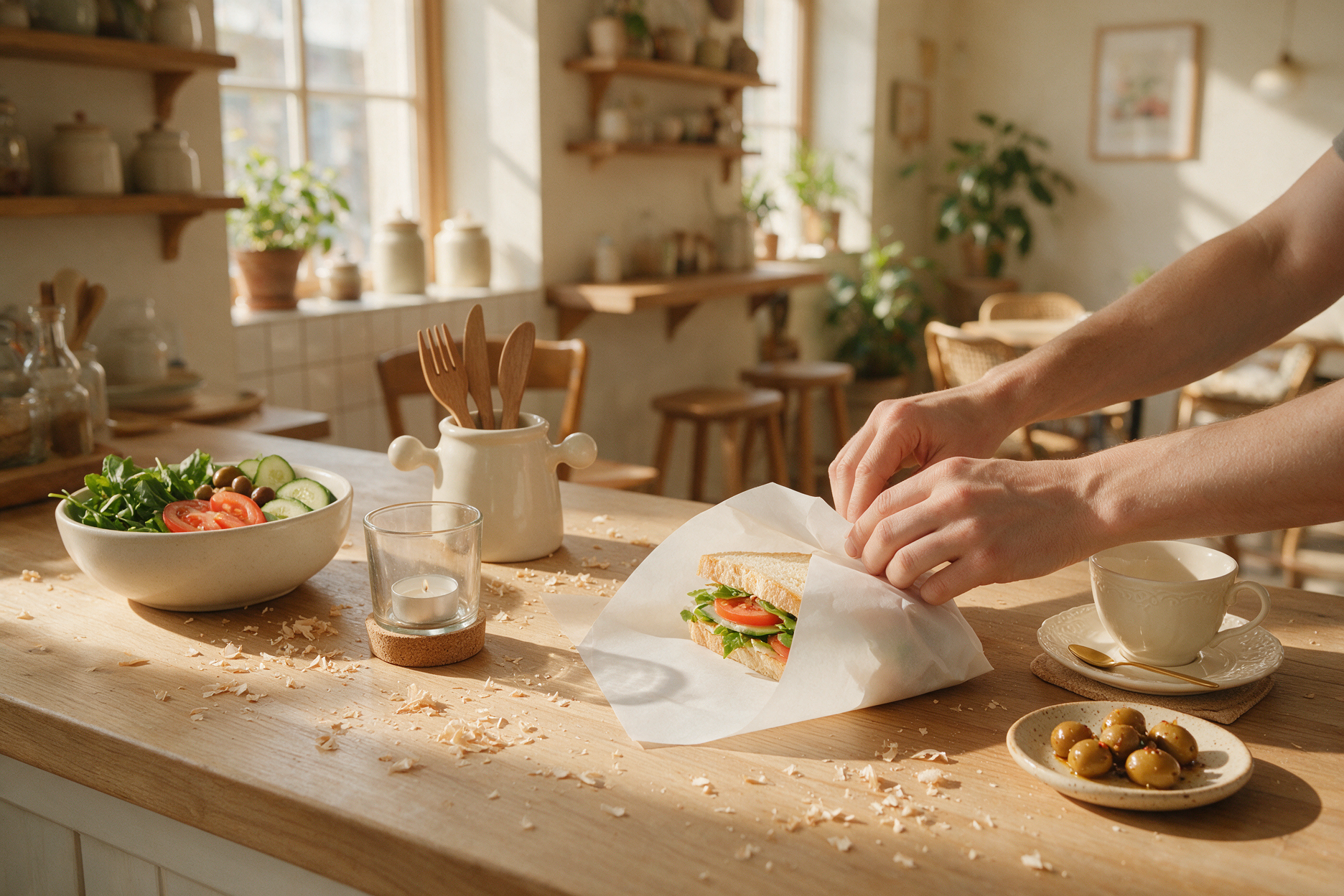
Butter paper substitute: what to use instead of butter paper
If you are looking for an alternative to butter paper, the right choice depends entirely on whether heat is involved. There is no single alternative that covers every job, so pick by what you are doing:
- For baking: parchment paper. This is the only straight swap, and it is better than butter paper for the job anyway.
- For wrapping cold food: wax paper works perfectly well. This is the one direction the swap goes safely.
- For wrapping meat or cheese that needs air: uncoated butcher paper, or a dedicated cheese paper if the cheese still needs to develop. Both breathe, which plastic and waxed sheets do not.
- For lining a tin in a pinch: foil, lightly greased. It will not stop sticking on its own.
What not to substitute: wax paper for anything going in the oven, and printer paper for anything at all — it is not made for food contact and the inks and brighteners in it are not meant to be eaten. In short, the best alternative for butter paper is parchment when there is heat and wax paper when there is not.
Butter paper sheets: rolls, sheets and what each is for
Butter paper is sold two ways, and which you want depends on how often you reach for it. A roll suits a home kitchen: you tear what you need, and the odd shapes sort themselves out. The cost is that every tear is a slightly different size and the roll curls, which is irritating when you are trying to line a tin flat.
Pre-cut butter paper sheets are the opposite trade. Every sheet is identical, they stack flat, and you can grab one with one hand — which is why counters and bakeries buy sheets rather than rolls almost without exception. Common sizes run from around 6×6 inches for single portions up to 12×12 and larger for wrapping and tray lining, and sheets can be cut to a size you specify if none of the standards fit what you serve. If you are wrapping the same item many times a day, sheets pay for themselves in the time they save, never mind the waste.
A note for food businesses
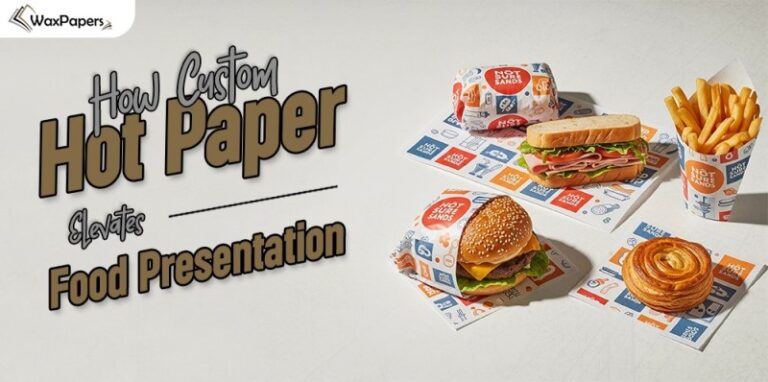
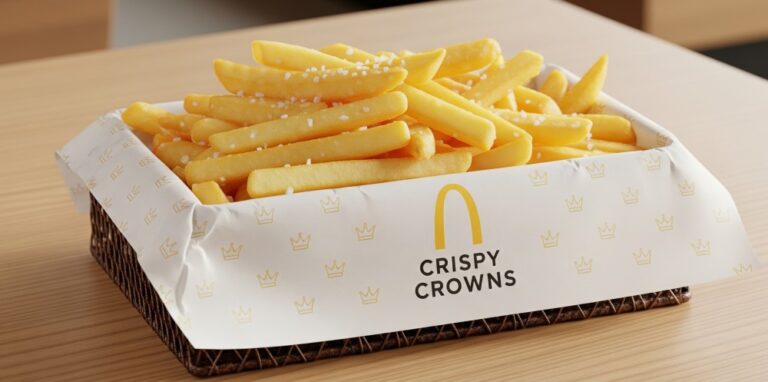
Everything above assumes a home kitchen. If you are buying by the case, the calculation changes, because the sheet is also the last thing your customer touches. A plain sheet does the job. A printed one does the job and carries your name to the table, into the delivery bag, and into the photograph someone takes of their lunch. The cost difference per sheet is small; the difference in how the order looks is not.
The practical advice is the same as above, just applied to volume. Work out what the food actually is before you choose the paper — hot and oily, cold and wet, going near an oven, or simply being handed over. We make custom butter paper, greaseproof paper, parchment, and deli paper, and the honest answer is that most kitchens need two of them rather than one. There is no minimum order on sheets, so it is worth running a small batch of the grade you think you need and seeing how it behaves on a real service before committing to volume.
Frequently asked questions
Is parchment paper butter paper?
Not exactly, though in several countries the phrase butter paper is used loosely for parchment or greaseproof paper, which is where the confusion starts. Technically they are different products: parchment is silicone coated and rated for sustained oven use, while butter paper in its stricter sense is greaseproof but not silicone treated. If a recipe specifies parchment, buy something labelled parchment rather than something labelled butter paper.
Can you put wax paper in the oven?
No. Well below normal baking temperatures the wax coating softens and runs, leaving the bare paper exposed to direct heat. The precise failure point depends on the wax and the grade, so treat any single number you see quoted with suspicion. The only common exception is a disc in the base of a cake tin that is entirely covered by batter.
Is wax paper the same as greaseproof paper?
No. Wax paper has a coating applied on top; greaseproof paper gets its resistance from the way the fibres are refined. Greaseproof handles heat considerably better.
Can you microwave wax paper?
Briefly, yes. A microwave heats the food rather than the air, so the paper does not reach the temperatures it would in an oven. Keep it short and do not let it touch anything that gets very hot, such as melted cheese or sugar.
Is wax paper safe to touch food?
Food-grade wax paper is made for exactly that. The thing to check is that it is sold for food use rather than for crafts, because craft wax paper is not held to the same standard.
Which should I keep in the kitchen if I only want one?
Parchment. It covers baking, which is the job where the wrong choice actually matters, and it will cope with most of the wrapping tasks the other two handle.