
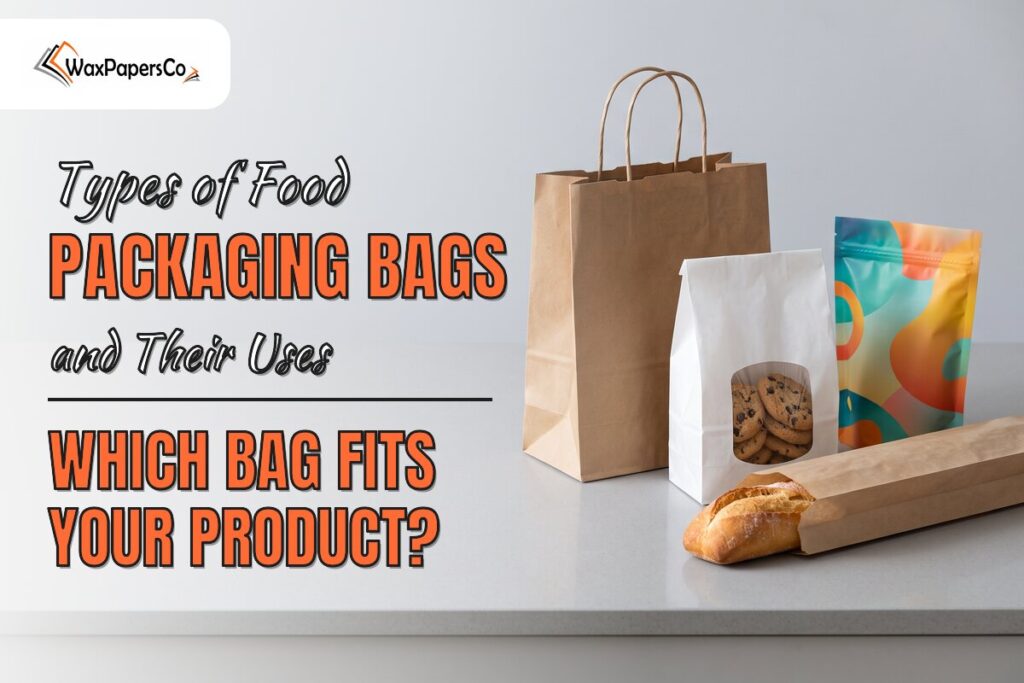
Quick answer: Takeaway orders go in kraft paper bags, cookies and donuts in flat-bottom bakery bags, loaves in tall bread bags and croissants in greaseproof pastry bags. Anything that needs to last for months on a shelf belongs in a mylar pouch, and jerky needs a resealable high-barrier pouch.
Ask ten bakery owners how they chose their first bags and most will say they copied whoever was nearest. That works fine right up until a box of croissants arrives at an office covered in grease spots, or a regular complains that yesterday’s sourdough came out of its bag with a crust like a sponge.
None of this is hard to fix once you know what each type of food packaging bag is designed for, which is what this guide is about. We’ll go through kraft, bakery, bread, pastry, mylar and jerky bags in turn, then finish with a few questions that make the choice easier. You can keep our custom bags page open in another tab if you want to see the styles while you read.
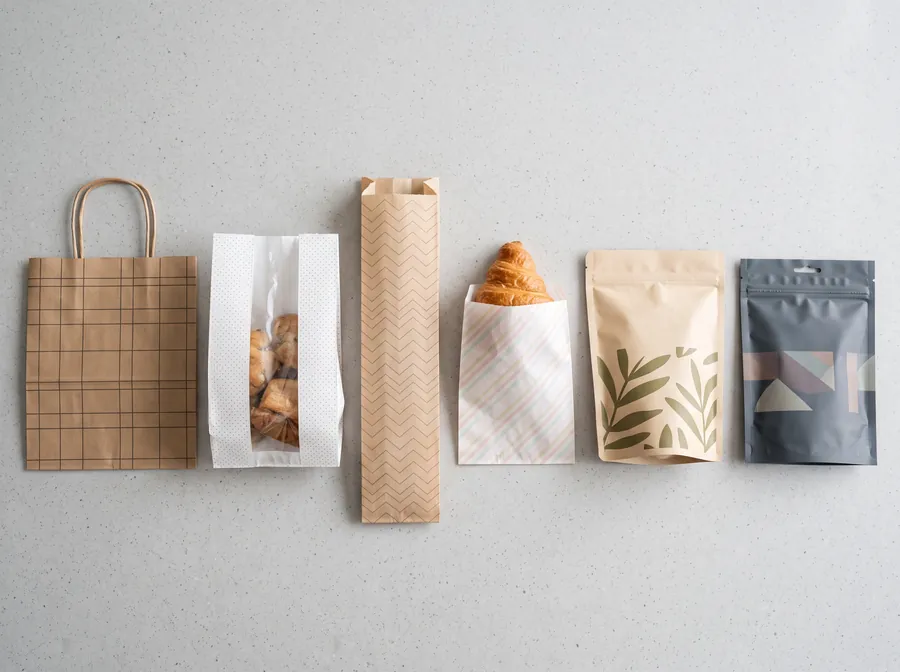
Food packaging bags at a glance
| Bag type | Best for | Main job | Useful extras |
|---|---|---|---|
| Kraft paper bags | Takeaway, groceries, retail | Carrying | Twisted handles, grease-resistant grades |
| Bakery bags | Cookies, donuts, muffins | Short-term carry and display | Flat bottom, window |
| Bread bags | Loaves, baguettes, sliced bread | Protecting crust and shape | Window film, tin ties, microperforations |
| Pastry bags | Croissants, Danish, single pastries | Holding back grease | Greaseproof paper, fold-over top |
| Mylar bags | Coffee, snacks, dried fruit, dry goods | Long shelf life | Zipper, multi-layer barrier |
| Beef jerky bags | Jerky, meat sticks | Blocking oxygen and moisture | Resealable, works with oxygen absorbers |
Kraft paper bags
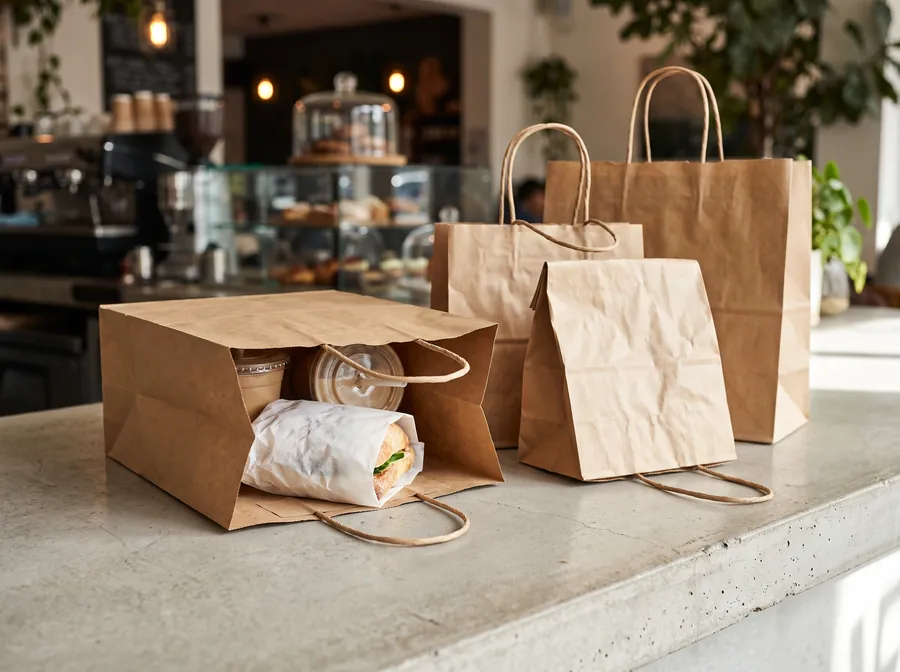
When people picture a paper bag, the brown kraft one with twisted handles is usually what comes to mind. Restaurants and cafes reach for it because it holds a surprising amount of weight for how light it is, and because a logo printed on brown paper tends to look good without much effort. Most of the time it carries food rather than stores it, whether that’s a lunch order, a few groceries or a cake box heading home.
Where people go wrong is assuming all kraft is the same. If you look at our custom kraft paper bags, you’ll notice there are several grades, and each solves a different problem. Wet-strength kraft (80 to 130 GSM) copes with damp counters and rainy delivery runs. For fries and fried chicken, the grease-resistant grade (40 to 80 GSM) stops oil from showing through, and when a bag gets handled a lot or needs to feel more upmarket, laminated kraft (90 to 150 GSM) is the one to ask about.
On handles, twisted paper beats flat for takeaway almost every time because it’s kinder to fingers and carries more. And if hot food is going inside, wrapping it first in deli paper or sandwich paper keeps the bag clean; our post on deli paper sizes will help you pick the sheet.
Bakery bags
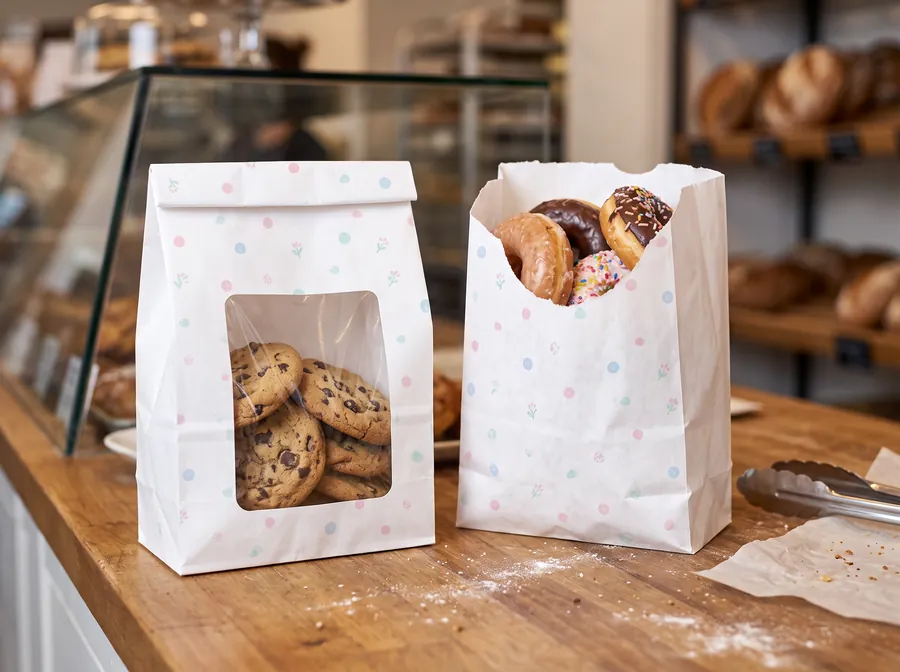
Cookies, donuts, muffins and bagels usually get eaten the same day or the next, so they don’t need a bag that keeps them fresh for long. What they do need is a bag that’s easy to fill in a hurry and doesn’t fold flat on a car seat. That’s the reason so many bakeries settle on the flat-bottom style, where a square base and fold-out sides let the bag stand on its own while staff drop the order in.
Adding a window is one of the cheapest upgrades you can make. People decide with their eyes, and being able to see a chocolate chip cookie through the front of the bag sells it better than any label. Window and size options are listed on our custom bakery bags page.
There are limits, of course. Frosted cupcakes and mixed dozens tend to get squashed in a bag, so for those you’re better off with bakery boxes, cookie boxes or cupcake boxes.
Bread bags
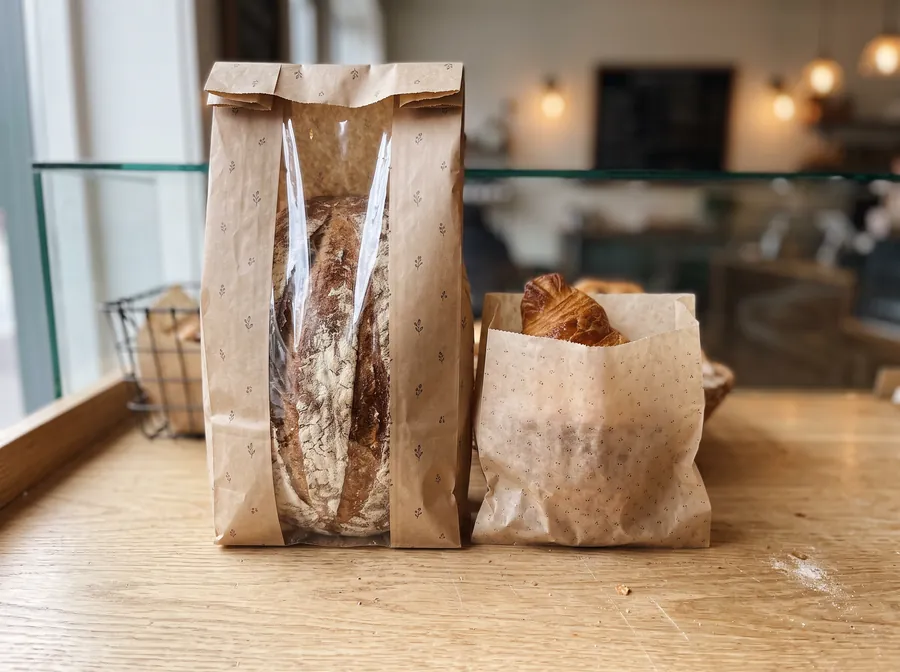
You can usually spot a bread bag by its shape, since it’s taller and narrower than a bakery bag and often has a gusset down the side for extra room. Choosing the right one comes down to what kind of bread you bake.
With crusty loaves like sourdough and baguettes, the trick is letting them breathe. In a sealed plastic bag the moisture coming off the bread has nowhere to go, and within a few hours that lovely crust has gone soft. Paper lets some of it escape, and paper with microperforations does an even better job. Soft sandwich bread works the other way round, because it goes stale by drying out, so a bag that holds moisture in suits it better.
Our custom paper bread bags can be ordered with a clear window film so customers see the crust, along with extras such as tin ties, resealable zip closures and an anti-fog coating that stops the window clouding over when warm bread goes in.
Pastry bags
A pastry bag is that small, flat bag a single croissant or Danish comes in, and butter is its biggest enemy. Thin uncoated paper starts showing a see-through grease patch within minutes. There’s nothing wrong with the pastry inside, yet customers notice it straight away.
Greaseproof paper solves this because oil struggles to pass through it, which is why it has become the default for most bakeries (we explain how it works in what greaseproof paper is). Besides greaseproof, you can choose kraft pastry bags, window pastry bags or fold-over styles that close without tape, all of which are on our custom pastry bags page. Bakeries that wrap by hand can use loose greaseproof sheets or glassine paper instead.
Mylar bags
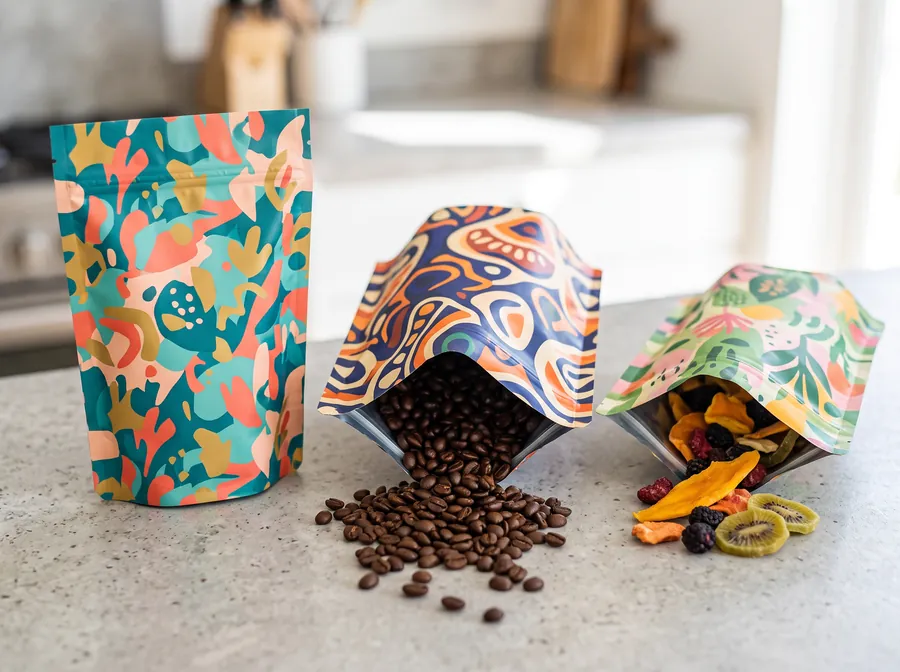
Once food has to last weeks or months, paper stops being enough. Mylar bags are built from several thin layers of film, normally including a metallized layer, and between them those layers keep moisture, oxygen and light away from the food. Coffee roasters use them, and so do brands selling nuts, dried fruit, candy, granola, spices and pet treats.
Most food mylar bags are stand-up pouches with a zipper on top, which means customers can close them again after each use. A window is technically possible, although I’d steer coffee brands away from it, since keeping light out is part of what the bag is for.
To see what’s available, browse our custom mylar bags or play with a layout in the pouch designer.
Beef jerky bags
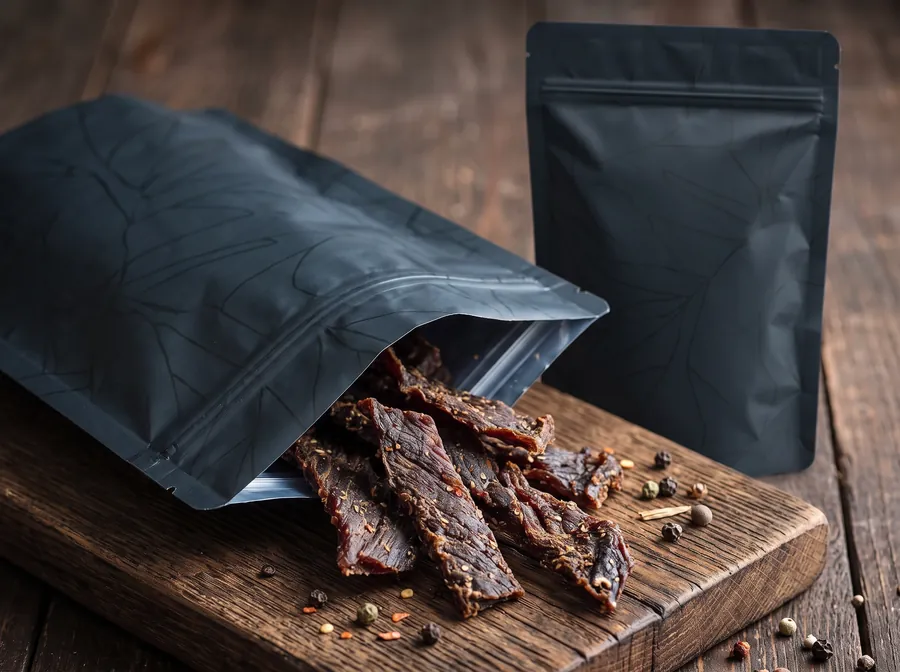
Why does jerky need its own bag? Even dried meat holds a little fat and moisture, and the moment oxygen gets to it, it starts heading toward stale or rancid. A jerky bag is basically a mylar or laminated pouch designed with that problem in mind.
For our custom beef jerky bags we use high-barrier films such as EVOH or metallized layers, add resealable zippers, and make sure they work with oxygen absorbers, the small sachets that soak up any oxygen left after the bag is sealed. Windows are an option here as well, but many jerky brands leave them off for the same reason coffee roasters do.
How to choose the right food packaging bag
Whenever a customer isn’t sure which bag to order, we ask the same handful of questions, and the answers usually narrow it down to one option.
- How long does the food have to stay fresh? Food eaten on the day is fine in paper, while anything sitting on a shelf for weeks needs a barrier bag such as mylar.
- Is it greasy? Butter and frying oil call for greaseproof paper or grease-resistant kraft.
- Does it need air? Crusty bread and warm food go soggy when they’re sealed in.
- Do customers need to see it? Windows help sell cookies and bread but work against coffee and jerky.
- Will the bag be opened more than once? If so, a resealable zipper is worth the small extra cost.
Before committing to a big order, try a small batch of two styles for a week. Your staff will have an opinion within a day or two, and so will your regulars.
Common mistakes we see
The most common one is sealing fresh sourdough in plastic, which leaves the crust soft by the next morning. Close behind is putting croissants in thin uncoated paper, so the grease shows before the customer has even left. Coffee in clear pouches looks great on the first day but loses flavor faster than it should, and using one bag size for everything means a single cookie rattling around a bag built for six, which looks cheap and wastes paper. Two or three sizes are enough for most menus.
Printing your logo on food bags
Since you’re buying bags anyway, printing your logo on them costs little and puts your name in front of everyone your customer walks past. Simple one-color logos suit brown kraft well, whereas full-color artwork comes out sharpest on white paper and mylar.
You can upload your artwork and check it in 3D using our bag designer. Alternatively, send your product, size and quantity through the quote form and our team will suggest a material.
Frequently asked questions
What are the main types of food packaging bags?
The ones you’ll come across most are kraft paper bags, bakery bags, bread bags, pastry bags, mylar bags and beef jerky bags. Paper bags are meant for food eaten within a day or two, whereas mylar and jerky pouches keep food fresh for weeks or months.
Which bag keeps food fresh the longest?
High-barrier pouches such as mylar last the longest, because their layered film keeps out moisture, oxygen and light. A resealable zipper and an oxygen absorber extend that further.
Are paper bags safe for food?
They are, provided the paper is food grade. If the food is greasy or wet, pick a grease-resistant or coated grade so nothing soaks through.
What is the difference between a bakery bag and a pastry bag?
A bakery bag is usually a larger flat-bottom bag that stands up and takes several items, such as cookies or donuts. Pastry bags are smaller and flatter, are often made from greaseproof paper, and hold one or two pastries.
Should bread bags have a window?
For artisan bread a window is a good idea, since customers like seeing the crust. Put it on a paper bag when the loaf is crusty so the bread can still breathe.
Can I get custom printed food bags in different sizes?
Yes. Wax Papers Co makes every bag type covered here in custom sizes and styles, printed with your logo and design.
Find the right bag for your product
If you take one thing from this guide, let it be the three questions that matter most: how long the food has to last, whether it’s greasy, and whether it needs to breathe. Once those are answered, size and print are the easy part.
Have a look through our custom food bags or request a free quote, tell us what you sell, and we’ll help you find a bag that fits, printed with your logo.